

Point #1: Emma Greedy Out Here Being Anti-Black”
Chile, here we are talking about Emma Greedy again.
This lady recently said she does not invest in first-time founders unless she sees something extraordinary about the proposition, using Ami Colé as an example of what she did not see.
That is not a neutral statement.
It is a public dismissal. It is a framing choice. And it is deeply disrespectful considering the very public record of how Grede has already interacted with Ami Colé and with Diarrha N’Diaye.
What makes this so insulting is the contradiction.
Grede watched Ami Colé rise and fater the brand closed offered N’Diaye a job at SKIMS to produce beauty concepts and ideas.
Read that again.
You do not court a founder for their creative mind, their product instinct, and their ability to turn culture into commerce, and then turn around and say you did not see anything extraordinary.
That is the part that lands as ugly. Because it suggests something else.
It suggests that the “extraordinary” was visible enough to extract.
Visible enough to replicate. Visible enough to turn into a revenue line for someone else.
Chile.
There are cultural and ethnic tones embedded in that disposition.
A familiar pattern in beauty.
A familiar pattern in business.
I do not need to over-explain it. The girls that get it, get it.
Grede also said on a podcast that N’Diaye “perhaps lacked the business acumen to start a business.” That sentence is not feedback.
It is classic white rhetoric and branding.
It is the kind of quote that sticks to a person’s reputation because it sounds like insider truth.
But let’s be serious.
How many founders actually start with real, polished, boardroom-grade acumen?
Most founders start with a point of view.
They start with hunger. They start with taste. They start with community.
They learn the business by doing the business. And when they are resourced, mentored, and funded, they learn faster.
So what, exactly, is the point of using “business acumen” as a weapon?
The Standard Magically Changes When The Founder is White
I remember ever so clearly how Emily Weiss spoke at Glossier.
In individual conversations and in all-hands meetings, Weiss would talk openly about going to art school and not really knowing what they were doing at the beginning.
People loved it. People romanticized it. People called it visionary.
But when a Black woman is perceived as learning in real time, suddenly it becomes proof they were never qualified.
Suddenly it becomes a punchline.
Suddenly it becomes justification to pass, to dismiss, and to label a Black founder as a “bad fit” to run the brand.
That is anti-Blackness dressed up as discernment.
And the beauty industry will never be as innovative as it claims to be until it stops punishing Black founders for being human while rewarding white founders for being inexperienced.
Point #2: White Male Fragility In Beauty
A friend of mine recently sent me this piece published by Cosmetic Business published an article titled “How Rob Rausch became beauty’s unexpected it boy,” and it infuriated me.
Because it carried the kind of racist and homophobic rhetoric that always shows up when the industry tries to decide which men “count” in beauty.
I have always stood on this hill. Black men, along with Black women, are the future of beauty.
We always have been.
And any time Black men make strides in this space, it gets trampled by white people rushing to rename the moment.
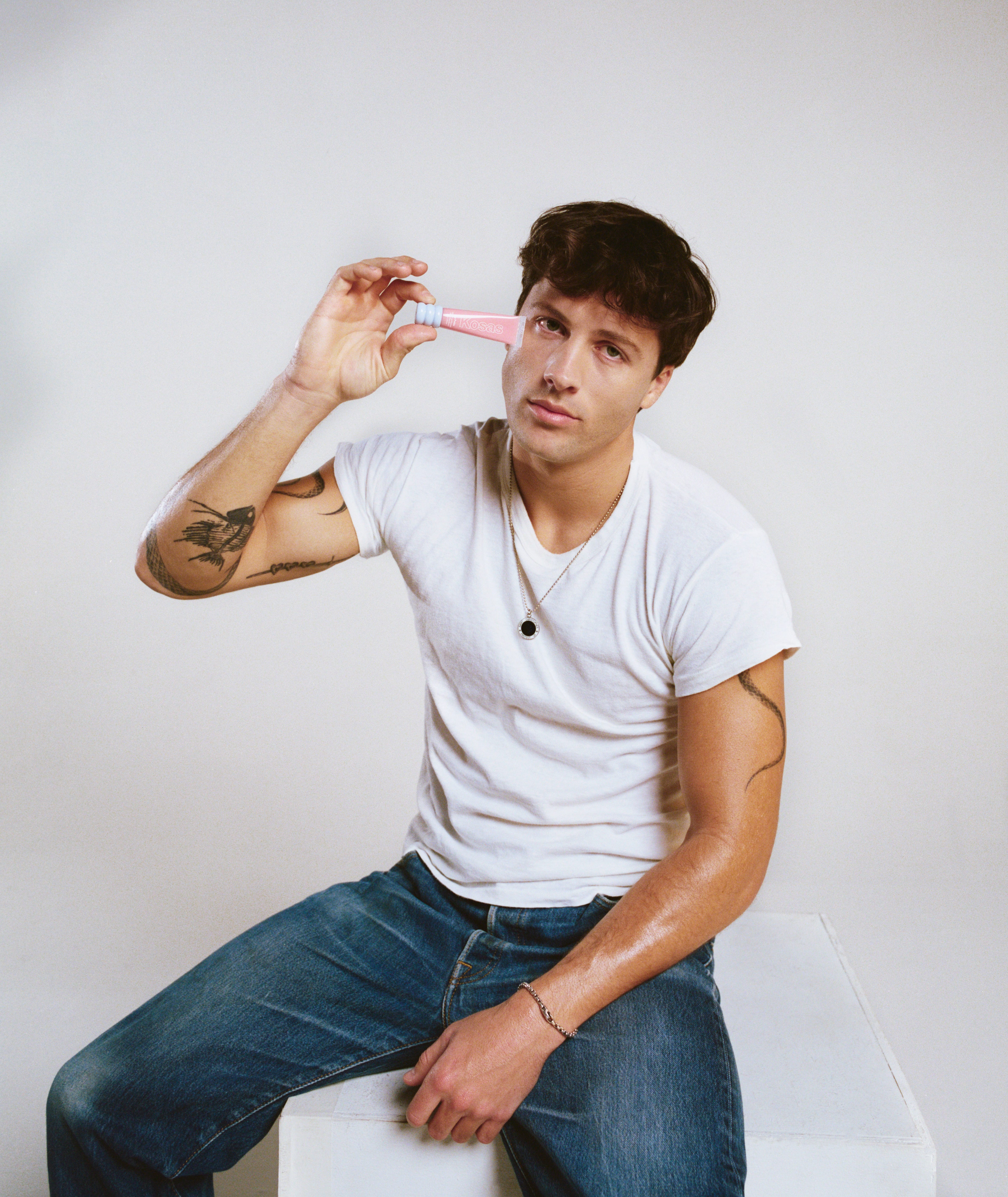
“So this is something different” is a dog whistle
In the article, Olivia Crowley, founder of Living Lavish Social, is quoted saying:
“Beauty has always skewed female, and when men have been included historically, it has tended to be within LGBTQ+ narratives, so this is something different.”[1]
Literally shut the fuck up.
Not because men in LGBTQ+ narratives do not belong.
They do.
But because this framing erases other realities to make a white man feel novel.
There are many straight Black men who fit the bill. There are many Black men doing the work.
There are many Black men building brands, building campaigns, building creative worlds, and building cultural language that everyone else profits from.
But the industry keeps acting like visibility only becomes “different” when it becomes white.
“When It’s White, It’s Right”
That is the throughline.
When it is white, it is safe.
When it is white, it is marketable.
When it is white, it becomes an “it boy” story.
And when it is Black, it becomes a risk.
Or a niche.
Or a trend.
Or something to borrow, dilute, and sell back.
We are exhausted.
And white fragility is a huge part of why the beauty industry cannot move forward without dragging its own bias behind it.
Oh not a lie told, cousin. Whew perfectly said!!!